Andersen’s Odense
Ninety minutes west, the city where Hans Christian Andersen was born in 1805 rebuilt its old quarter around his fairy tales — and its cathedral keeps a murdered king’s bones in a glass case downstairs.
The short version
- Trains run Copenhagen to Odense in about 75–90 minutes across the Great Belt (dsb.dk), with the Andersen quarter a ten-minute walk from the station.
- The H.C. Andersen Hus is the anchor per the alarm: the 2021 museum by Kengo Kuma wraps the corner house where Andersen was born in 1805 inside a sunken garden of curved timber pavilions — the fairy tales staged as immersive story-worlds around the biography — with timed tickets that sell through summer days (hcandersenshus.dk).
- The biography’s second address stands nearby: the tiny childhood home on Munkemøllestræde where the shoemaker’s son grew up — one room’s poverty explaining half the tales — kept as its own small museum.
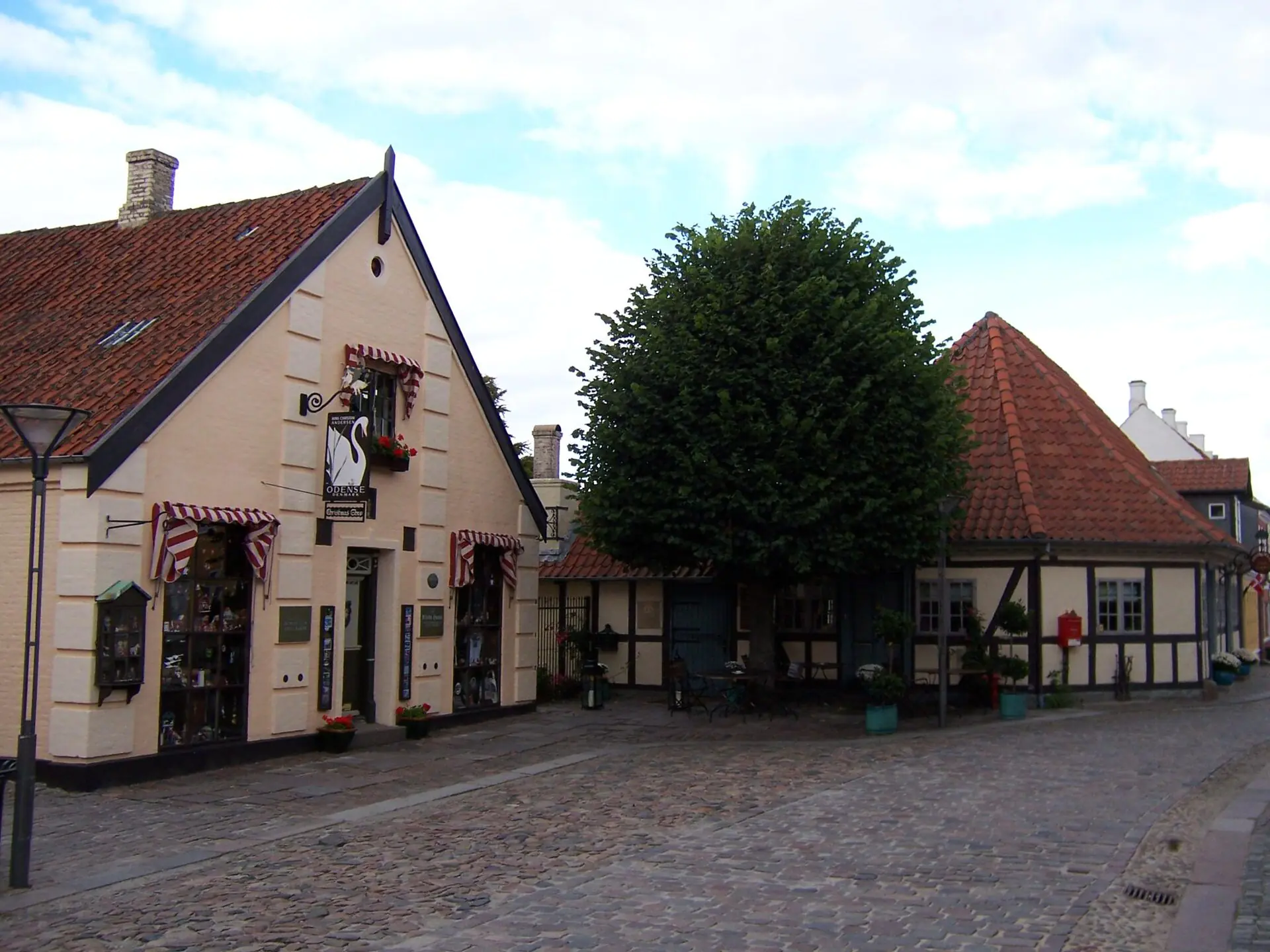
- The fairy-tale quarter is the setting: cobbled lanes of low ochre-and-timber houses restored around the museum, with the city’s sculpture trail scattering tin soldiers and paper boats for the finding.
- St. Canute’s Cathedral carries the alarm’s king: Canute IV — Canute the Holy — was killed at the altar of a predecessor church in 1086 and canonized a century later; his skeleton (and his brother’s) lies displayed in a glass case in the brick-Gothic crypt, one of Scandinavia’s more startling free sights.
- The town rounds the day at Danish third-city register: the Møntergården city-history museum’s courtyards, the Odense River’s boat-and-path green corridor, and Brandts’ converted-textile-mill arts quarter for the modern hour.

Getting there
The rail line west crosses the Great Belt bridge — itself worth the window seat — and Odense’s compact center makes station-to-museum logistics trivial. The one booking per the alarm is the museum’s summer slot: mornings sell first and suit the day’s shape anyway. Everything else walks: birth quarter, cathedral, river, and lanes inside a fifteen-minute radius. The read-one-tale clause is executable — the museum shop sells the pocket editions the ride home was built for.
The day
The museum takes the booked morning: Kuma’s sunken timber circles, the fairy tales staged room by room — the shadow theatre, the sea-witch dark, the emperor’s mirrored vanity — resolving finally at the little corner house itself, preserved plain inside the spectacle, where the story actually began. The childhood home on its lane adds the poverty the museum’s poetry stands on. Lunch runs the old quarter’s cafés among the ochre houses. The cathedral anchors the afternoon per the alarm: the brick-Gothic nave, the gilded altarpiece, and the crypt’s glass case — Canute’s bones lit plainly, the 1086 murder and the sainthood told by the panels beside them, history at zero admission and full frankness. The river path or Brandts’ galleries spend the remainder by temperament. The evening train re-crosses the Belt at golden hour with the assigned fairy tale open.
When to go
Year-round per the glance — museum, cathedral, and lanes are all-weather — with May through September opening the museum garden’s full design and the river’s boat season. Summer enforces the slot-booking clause; winter walks in without one. December dresses the quarter for Christmas at genuine Danish standard, and the museum’s dark-season staging arguably improves the fairy tales. The city’s flower festival (August) and H.C. Andersen Festival (late August) are the calendar’s crowded, charming peaks.
Frequently Asked Questions
Is the new museum good for adults?
Genuinely — Kuma’s architecture and the staging treat the tales as literature with shadows, not a children’s park: the rooms run melancholy, wonder, and wit in Andersen’s own proportions, and the biography (poverty, ambition, loneliness, fame) is told unvarnished. Children thrive in it anyway. The birth house at its heart is the quiet center the spectacle serves.
What’s the story with the king’s bones?
Canute IV pushed church power and taxation hard enough that rebels killed him at the altar in Odense in 1086; Rome canonized him in 1100, making him Denmark’s patron saint, and his relics — displayed for pilgrimage in the Middle Ages — lie in the crypt’s glass case today with his brother Benedikt beside him. It’s free, frank, and startling in the way only Scandinavian directness manages.
Do I need the museum ticket in winter?
Booking matters June–August per the alarm; shoulder and winter visits usually walk in or book same-day. The combined tickets covering the childhood home add the second address for little more. Check the day’s slots before the train either way — the morning ones shape the day best.
What else is Odense known for?
Denmark’s third city runs a proper cultural economy beyond Andersen: the Brandts arts quarter, the city-history courtyards of Møntergården, a football-and-tech modern identity, and the river corridor that makes the whole center green. The fairy tales are the draw; the town underneath them is a comfortable, unhurried host.
Odense or Roskilde from Copenhagen?
Roskilde (documented on this network) for Viking ships and the royal cathedral at half the ride; Odense for Andersen and the fuller day west. Longships versus fairy tales — both cathedral towns, both single-anchor days, and the honest Copenhagen week does both in opposite directions.