Dragør from Copenhagen
A 350-year-old fishing town forty minutes from the city by bus — cobbles, hollyhocks, and history that matters.
The short version
- Bus 250S runs from central Copenhagen to Dragør in about 40 minutes; the 35 connects from the airport side. Plan it at rejseplanen.dk. No train, no metro — the bus is the way.
- The old town is the draw: lanes of yellow-washed, red-roofed houses under hollyhocks, kept whole since the 1700s and still lived in. Walk them early and quietly — this is a village, not a set.
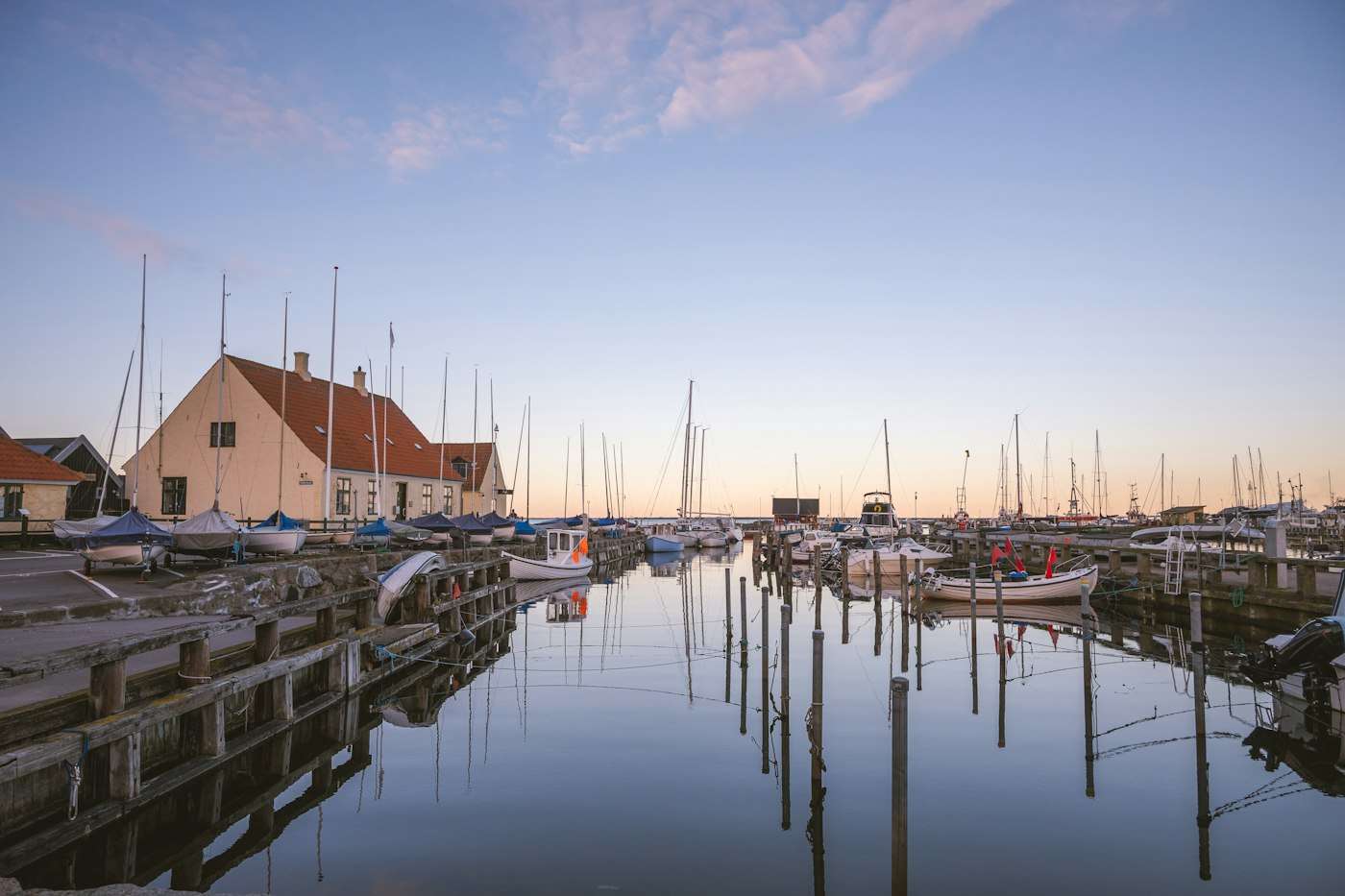
- The harbor still works: fishing boats, smokehouse lunches on the quay, and the Øresund bridge on the horizon. Dragør Røgeri’s fish and chips has a following the queue confirms.
- In October 1943, fishing boats out of Dragør and harbors like it carried Danish Jews across the Øresund to neutral Sweden — part of the rescue that saved more than 7,000 people in a matter of weeks. The local museums tell it plainly and well; details at museumamager.dk.
- Pair the town with the flat coastal walk south toward the Kongelunden woods, or simply take an ice cream to the harbor mole and watch the planes climb out of Kastrup.

Getting there
Bus 250S leaves central Copenhagen for Dragør throughout the day and takes about 40 minutes; from the airport area the 35 does the same job. Check both directions at rejseplanen.dk — buses, not trains, serve the town. Cyclists ride the flat, signed route across Amager in about 45 minutes, which is the most Danish possible way to arrive. The bus stops a short walk from the harbor and old town.
The day
Start where the town started: the harbor. Dragør grew rich on herring and pilotage, and its working waterfront — boats, sheds, smokehouse — still faces Sweden across the strait. Walk the old town’s grid of lanes slowly; the yellow lime-wash, black tarred plinths, and red tiles are a preserved whole almost unmatched in Denmark, and the details reward the third look. The local museum by the harbor covers the town’s seafaring centuries and the episode that gives Dragør its weight: in the first days of October 1943, as the deportation order came, fishermen here and along this coast ferried Jewish families across the Øresund to Sweden by night. Most of Denmark’s Jews survived the war because of those crossings. Lunch at the smokehouse or a harbor café, then either the coastal path south or an unhurried return — the town asks for an afternoon, not a forced march.
When to go
May through September, when the hollyhocks are up, the harbor is busy, and the light lasts — high summer weekends bring Copenhagen families, but the town absorbs them better than most. Winter is stark, quiet, and has its own honesty; the museum keeps shorter cold-season hours, so check before building the day around it.
Frequently Asked Questions
How do you get to Dragør from Copenhagen?
Bus 250S from the city centre, about 40 minutes; bus 35 serves the airport side. There is no train or metro — check rejseplanen.dk for times. By bicycle it is a flat, signed 45 minutes across Amager.
What happened at Dragør in 1943?
In early October 1943, Danish fishermen ferried Jewish families by night across the Øresund to neutral Sweden from Dragør and nearby harbors — part of the nationwide rescue that saved over 7,000 of Denmark’s roughly 7,800 Jews. The local museum covers it with care.
Is Dragør worth it compared to Nyhavn’s postcard views?
They are different things: Nyhavn is a city quay, Dragør is a whole preserved maritime town that people still live in. For half a day of cobbles, harbor, and calm, Dragør is the better use of the bus fare.
Where should you eat?
On the harbor — the smokehouse tradition survives, and fish straight off the quay is the town’s dish. Summer queues at the famous spots move fast; the ice cream afterward is mandatory by local custom.
How long does Dragør take?
Three to five hours covers the old town, the harbor, the museum, and lunch without hurrying. It pairs well with a morning or evening in Copenhagen on the same day.