An Afternoon at Louisiana
Thirty-five minutes up the coast, Denmark’s great modern art museum runs three villas joined by glass down a garden to the sound — Giacometti’s figures against a wall of lake, Calder against the water, Sweden across the strait.
The short version
- Coastal trains run København H toward Helsingør at high frequency, stopping at Humlebæk in 35–40 minutes; the walk to the museum is signposted and takes ten — details and what’s on at louisiana.dk.
- The museum opened in 1958 as founder Knud W. Jensen’s humane experiment: modern art in a 19th-century villa on the sound, grown since into wings joined by glass corridors — and the name honors the estate’s first owner, who married three women all named Louise, a fact the museum enjoys confirming.
- Entry runs in the DKK 145–160 range with the garden included — city-card schemes often cover it, per the alarm’s check-first clause, and under-18s enter free as standing policy.
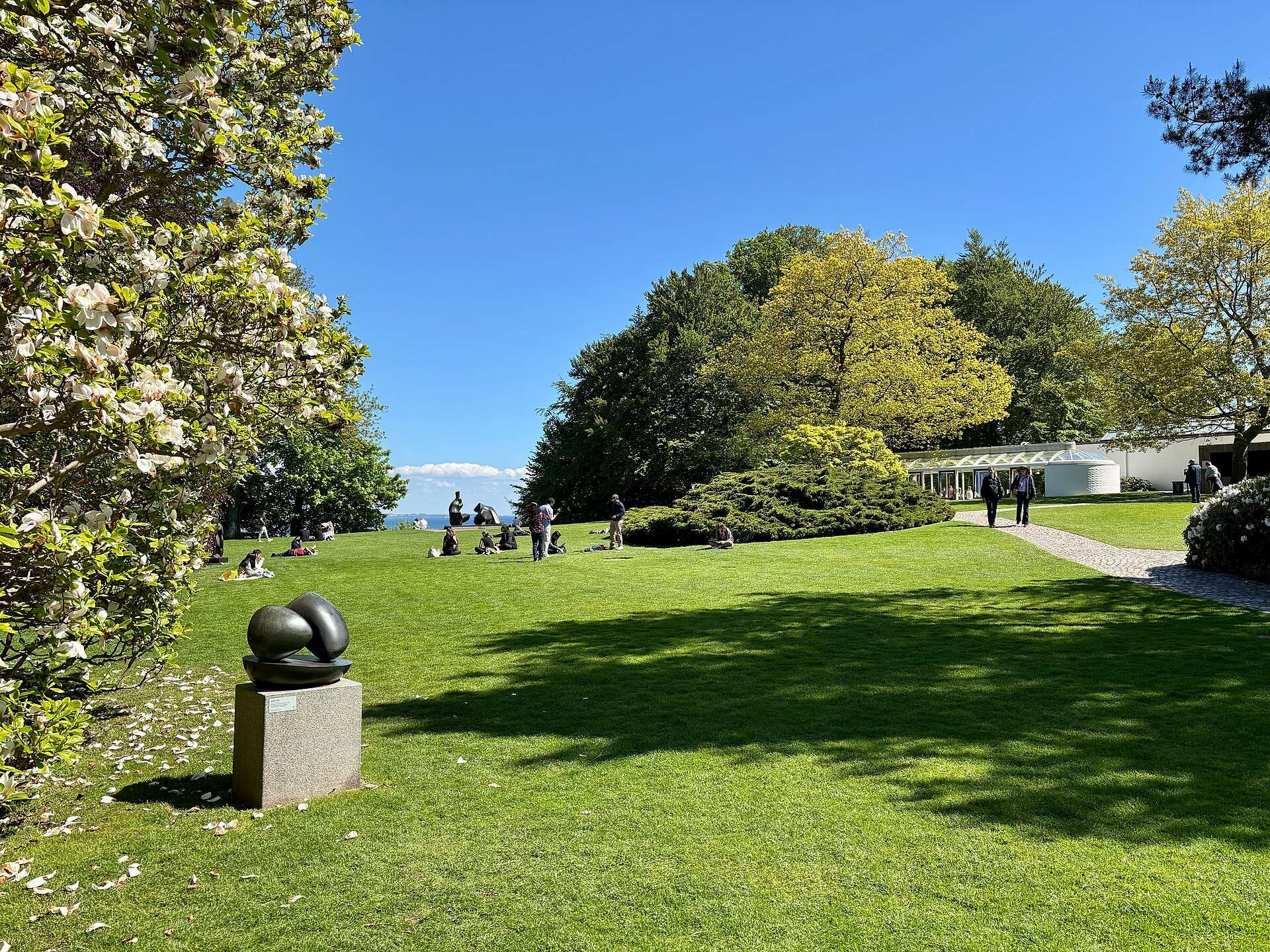
- The sculpture garden is half the argument: Calder’s stabiles against the Øresund, Moore’s bronzes on the lawns, Miró color by the café terrace, and Sweden’s coast as the permanent exhibition across the water.
- The Giacometti gallery is the building’s most quoted room — the attenuated figures stood against a full glass wall with the lake behind them, the collection’s postcard and the corridor architecture’s whole thesis in one view.
- The special exhibitions carry international weight (the museum runs among Denmark’s most visited), the children’s wing legitimizes the family visit, and the café’s terrace — smørrebrød over the sound — is a destination with its own partisans; Kronborg’s castle at Helsingør sits two stops on for the alarm’s greedy option, documented on this network.

Getting there
The Helsingør-line trains make this the easiest great museum commute in Europe — turn up at København H, ride the coast, follow the signs from Humlebæk’s platform through villa streets to the entrance. The alarm’s card check happens before the ticket window: the city’s tourist cards commonly include entry, and the museum honors them at the door. Late openings (evening hours on several weekdays as standing pattern) let the visit start after lunch and end past sunset over the water; the return trains run at metro indifference either way.
The visit
Enter through the original villa and let the architecture set the pace — the corridors deliver rooms and water in alternation, and the museum is built to be wandered rather than conquered. The Giacometti room asks its long look: the figures against the lake, the composition the building was bent around. The collection rotates through the wings (Warhol, Kiefer, Bourgeois among the anchors) with the special exhibitions taking the main halls at full production value. The garden is not the interval but the second museum: down the lawn past Calder to the sound’s edge, Moore on the slope, the lake loop under the beeches. Lunch at the café terrace justifies its reputation — smørrebrød, the water, and Sweden minding its business across the strait. The shop is Denmark’s best museum bookstore by standing consensus; the walk back to Humlebæk closes the loop, or the alarm’s greedy clause boards the train two stops north to Kronborg’s ramparts.
When to go
The museum runs year-round with the garden as the seasonal variable — May through September puts the lawns and terrace at full strength, while winter turns the glass corridors into the point: art, grey water, and hygge executed at institutional scale. Weekends fill with Copenhagen itself (the museum is a Danish habit, not a tourist stop), so midweek mornings run clearest. Major exhibition openings book the calendar’s attention; the permanent collection and the Giacomettis hold the visit in any month, per the standing plan.
Frequently Asked Questions
Is it worth the trip out of Copenhagen with the city’s own museums?
By common Danish consent, yes — the collection is strong, but the ensemble of building, garden, and sound is what the city can’t replicate, and the 35-minute train makes it barely a trip at all. It’s the museum visitors remember when the itinerary blurs.
How long do I actually need?
Three hours covers collection, a special exhibition, and the garden at unhurried pace; the terrace lunch and the lake loop stretch it to five without effort. It’s a place built for staying — the day-trip frame fits it loosely and well.
Is it good with children?
Deliberately — the children’s wing runs hands-on art-making daily, the garden absorbs energy, and the entry policy waves minors through free. It’s among Europe’s least hostile great museums for a family day.
What’s the Kronborg pairing logistics?
Two more stops to Helsingør on the same line — Hamlet’s castle (documented on this network) fills a half day itself, so the pairing means a disciplined museum morning and a castle afternoon. Greedy but proven, per the alarm; art-first travelers let Louisiana keep the whole day.
Can I swim or walk the coast?
The sound’s beaches flank Humlebæk for the hardy Scandinavian dip, and the coast path threads villa gardens north and south. The museum’s own lake loop and shore access cover the gentler version inside the ticket.